Commit Your Work to the Lord (and Keep Going With Peace This Year)
January has a certain feeling to it, fresh beginnings, blank canvas, sharp cold air, a clean calendar. January 2026 is here, and with it comes that familiar pressure to set new year goals that sound confident on paper, even when life feels anything but simple.
Many of us are carrying a lot at once. Family needs. A job or a growing business. A home that never stays clean for long. A faith that’s real, but sometimes tired. And somewhere in the middle, there’s that quiet nudge: “Build what God put in you.”
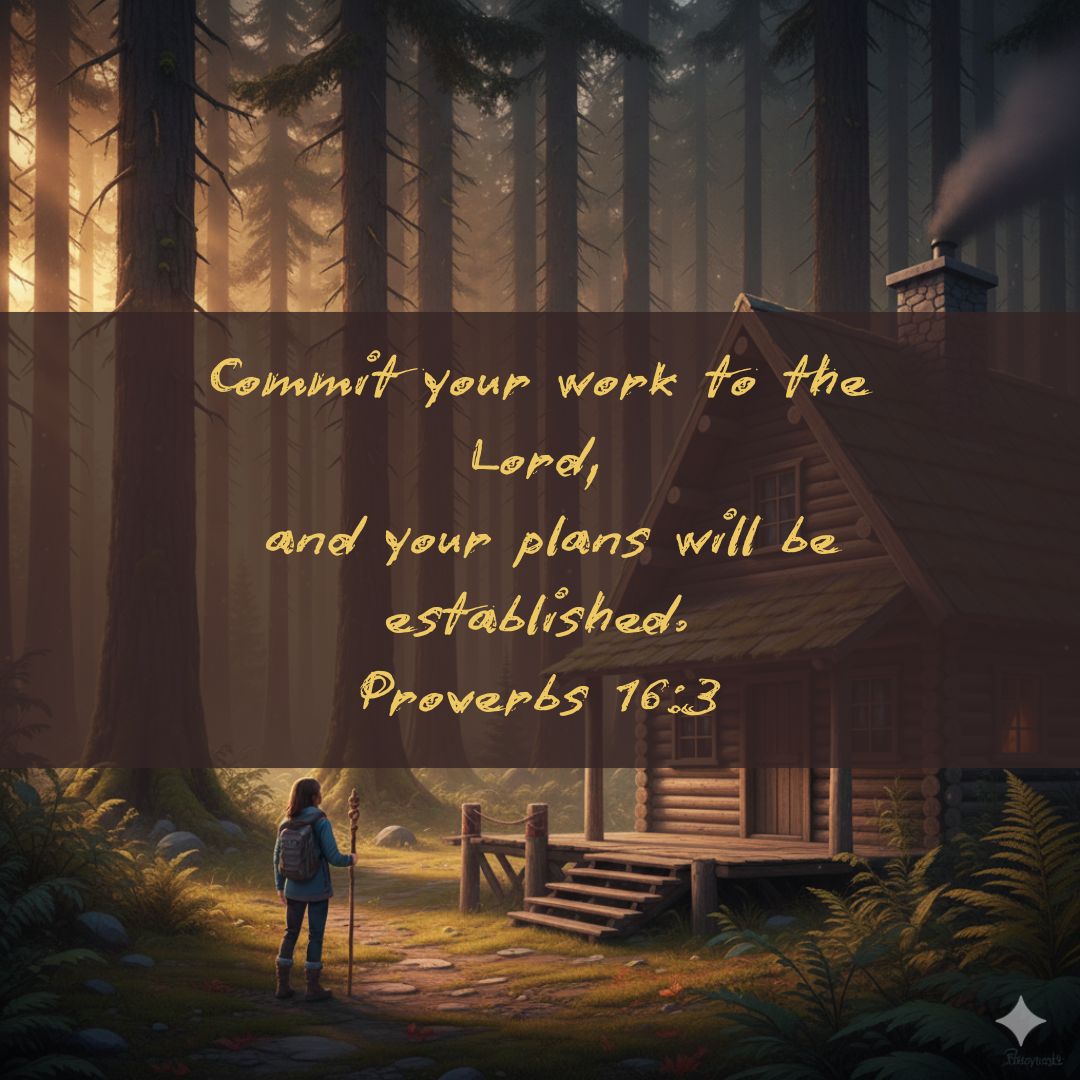
Proverbs 16:3 puts words to the moment: “Commit your work to the Lord, and your plans will be established.”
Not as a slogan, not as a cute caption. As a daily choice. The kind you make when you’re tempted to stay on the fence, overthink every move, and call it “being wise,” when it’s really fear trying to sound spiritual.
Here’s the good news. You don’t need perfect certainty to commit. You need a willing heart, a next step, and a simple way to follow through for the year without losing your peace.
What does it mean to commit your work to the Lord (Proverbs 16:3)
In plain language, “commit” means to hand something over. Like placing a heavy box into stronger arms. In the original sense, it carries the idea of rolling something onto someone else, transferring weight and responsibility.
That’s a different posture than asking God to bless what we already decided. One is a request. The other is surrender.
And “work” is not just paid work. For a Christian woman building a business, it can include:
- The business idea you can’t stop thinking about
- The content you create, and the message you share
- Your offer, pricing, and marketing decisions
- Client care, boundaries, and systems
- The unseen work at home, meals, schedules, aging parents, laundry piles
God doesn’t only care about “ministry work.” He cares about the work that shapes your days.
Then there’s the promise: your plans will be “established.” That word can feel slippery, so let’s ground it.
To be established is to become steady, clarified, supported. It’s when the fog lifts just enough for you to take the next step without spiraling. It’s when your direction firms up over time, even if you still feel a little shaky.
What it doesn’t guarantee: zero hard days, instant success, or a straight line. Proverbs is wisdom, not a vending machine.
Commitment is a handoff, not a handshake
A handshake can still hold back. You can smile, agree, and keep control.
A handoff is different. It’s when you say, “Lord, this is Yours,” and you mean it, even as you keep showing up to do the work.
Picture a simple example: you’re launching an offer this spring. You pray, plan, write the sales page, and share it with integrity. You set a number goal, but you don’t worship the number. You do your part, then you release the outcome.
Commitment releases results, not effort. It doesn’t make you passive. It makes you grounded.
God leads through both prayer and practical steps
Trusting God doesn’t mean waiting forever for a lightning bolt moment.
Most of the time, God leads like a lamp, not a stadium light. One step bright enough for today.
He often guides through:
- Scripture that steadies your thinking
- wise counsel from mature believers
- peace that grows over time (not pressure that spikes)
- open doors and closed doors that redirect you
One simple practice that changes everything: write down what you sense God saying. Not for perfection, but for clarity. When your thoughts get loud, your journal becomes a witness. It shows you patterns. It reminds you what’s true.
Why new year goals feel scary, and how fear disguises itself as overthinking
New year goals can feel hopeful, and also terrifying.
Not because you’re weak. Because you care. Because you don’t want to waste time, money, or energy. Because you’ve tried things before and they didn’t work the way you wanted.
Fear has a few favorite costumes for Christian women in business:
Fear of failing: “What if I try and it flops?”
Fear of success: “What if it works and I can’t handle it?”
Fear of judgment: “What will people think if I post that?”
Fear of wasting money: “What if I invest and it’s not worth it?”
Fear of getting it wrong: “What if God wanted something else?”
Overthinking feels like protection, but it’s often a slow leak. It drains peace and replaces it with constant mental motion.
Isaiah 41:10 speaks into that place with a steady voice: don’t fear, God is with you, He will strengthen you, He will help you, He will uphold you. It’s not a command that shames you, it’s a promise that holds you.
If you’ve ever wanted a clear, thoughtful explanation of that verse, BibleProject’s article on Isaiah 41:10 is worth your time.
Signs you are stuck on the fence (and paying for it with your peace)
Sometimes we don’t notice we’re stuck because we’re “busy.” But busy isn’t the same as moving forward.
Here are a few signs you might be living on the fence:
- You research constantly, but rarely decide.
- You change your plan every week.
- You keep waiting for perfect clarity.
- You ask many people for input, then feel more confused.
- You start and stop, start and stop.
- You delay a launch again, and again.
- You hide behind “one more course” instead of taking one brave step.
The cost shows up quietly. More anxiety. Less confidence. Lost time you can’t get back. And that nagging feeling that you’re always behind, even when you’re doing a lot.
Fence-sitting feels safe. It’s not. It’s just familiar.
A faith-based way to decide, even when you do not feel 100% sure
You don’t have to feel 100% sure to be faithful. You just need a clean “yes” for the next step.
Try this simple filter when you’re deciding what to commit to:
Scripture and values: Does this align with God’s heart and your convictions?
Service: Does it help real people in a real way?
Capacity: Do you have room for a next step without burning out?
Small step: Can you take one action without needing full certainty?
One of the kindest things you can do for your mind is to commit for a season. Not forever. Not for the rest of your life. For 90 days, or for one year.
A one-year focus can lower the constant pressure to re-decide. It gives your energy somewhere to land.
A simple 4-step plan to commit your work to the Lord and follow through this year
This is the part you can copy into a journal. Keep it simple. Keep it honest. Keep it doable.
When your new year goals are set with God instead of pressure, they stop feeling like a test. They start feeling like stewardship.
Pray for vision first, then pick one main focus
Before you choose a strategy, choose a direction.
A short prayer prompt you can use:
“Lord, show me who You want me to serve this year. Show me the gift You want me to use. Help me see what matters most, and let the rest fall quiet.”
Then choose one main focus for the year. Not ten. One.
For business, that might look like one audience, one primary offer, and one marketing rhythm you can keep. Focus is not limiting, it’s protecting. It keeps you from scattering yourself into exhaustion.
Write the plan, then surrender the outcome
Planning is not unbelief. Planning is wisdom, as long as you keep it open-handed.
Here’s a structure that works for real life:
1-year vision: What do you want to build by next January?
90-day goals: What needs to happen in the next quarter?
Weekly actions: What will you do this week that moves it forward?
Then add a surrender practice. Say it out loud if you can:
“Lord, this plan belongs to You. Correct me, strengthen me, and open the right doors.”
Surrender isn’t a one-time moment. It’s daily. Some days it’s hourly. Like returning a wandering heart back to center.
For a thoughtful pastoral reflection on Proverbs 16:3, this article by H.B. Charles Jr. captures the spirit of committed work without turning it into a formula.
Commit to consistent action, even when motivation dips
Motivation is a good visitor. It’s a lousy boss.
Consistency is what builds trust in your own voice. It’s what turns your idea into something real.
A light weekly rhythm for busy women can be enough:
- One CEO hour: review numbers, plan, pray, decide.
- One content block: write, record, or batch posts.
- One sales or outreach action: invite, follow up, serve, offer.
- One rest block: real rest, no guilt attached.
Notice the goal isn’t to do everything. It’s to do the right few things and keep doing them.
Try tracking faithfulness more than vanity metrics. Ask, “Did I show up?” before you ask, “Did it perform?”
Get support so you do not carry your calling alone
Some callings feel heavy because we’re carrying them alone.
Support doesn’t remove responsibility, it adds strength. It gives you feedback, prayer, and a place to tell the truth when you’re tempted to quit.
Choose one form of support for the year:
A trusted friend: a monthly check-in and prayer.
A small group: steady community and shared growth.
A coach or mentor: guidance, clarity, and help making decisions faster.
If you want a simple accountability question, use this one:
“What did you do this week to honor the vision God gave you?”
It’s gentle, but it’s not vague. It keeps you moving.
Practical ideas to help you commit (without making it complicated)
Sometimes we need one small action that makes commitment feel real. Not dramatic. Real.
Pick one idea from this section and do it within the next 48 hours. Don’t wait for a “better week.” This is your week.
Create a vision board in Canva that matches your calling
A vision board isn’t magic. It’s a mirror. It reflects what you’re choosing to keep in front of you.
Create one simple page and include:
- who you serve
- what you offer
- how you want to feel while working (peaceful, steady, focused)
- boundaries (work hours, family time, a true day off)
- an income goal that supports your life, not just your ego
- one Scripture that anchors your year
Place it where you’ll see it daily. Your brain learns by repetition. A holy focus is built the same way.
Take a long prayer walk to process your dreams with God
Clarity often comes while moving. Something about steady steps untangles a noisy mind.
Try this simple plan:
Leave your headphones at home. Walk long enough to settle, even 20 minutes helps. Ask God three questions as you go:
- “What are You inviting me into this year?”
- “What do I need to let go of?”
- “What is my next right step?”
When you get back, write a few sentences. Not a novel. Just a record. You’re building a trail of trust.
If you’d like more faith-based ideas for setting goals that actually stick, this post on setting godly goals offers practical encouragement without the hype.
This year doesn’t need a louder you. It needs a steadier you.
“Commit your work to the Lord, and your plans will be established” isn’t asking for perfection. It’s inviting you into a daily handoff, where you plan with wisdom, act with courage, and rest knowing God holds what you can’t.
Fear doesn’t get the final say. God is with you, and Isaiah 41:10 reminds you He will strengthen and help you.
Pick one goal for the year. Pray over it today. Take one small step this week. Then keep walking, one faithful step at a time.